Invisible No More
May 23, 2022 By Ellen Bee, LCPC

The month of May is observed in the United States as Asian American Pacific Islander (AAPI) Heritage Month, celebrating the contributions and achievements of Asian Americans and Pacific Islander Americans. While it is important to highlight the rich cultural legacies of the collective AAPI community in the United States, it is equally critical to address the current climate around AAPI hate and violence. History is replete with examples of race, gender, and heritage being used as rationale to other, dehumanize, and isolate individuals. Moving towards systemic change requires unpacking harmful AAPI narratives, acknowledging systems of oppression, and raising awareness of collective trauma to uplift marginalized communities. This post aims to name and demystify themes of racial microaggressions targeting the AAPI community, to speak to and validate AAPI experiences of discrimination, to provide education on harmful implicit biases, attitudes, and beliefs, and to offer concrete recommendations about how to address these issues.
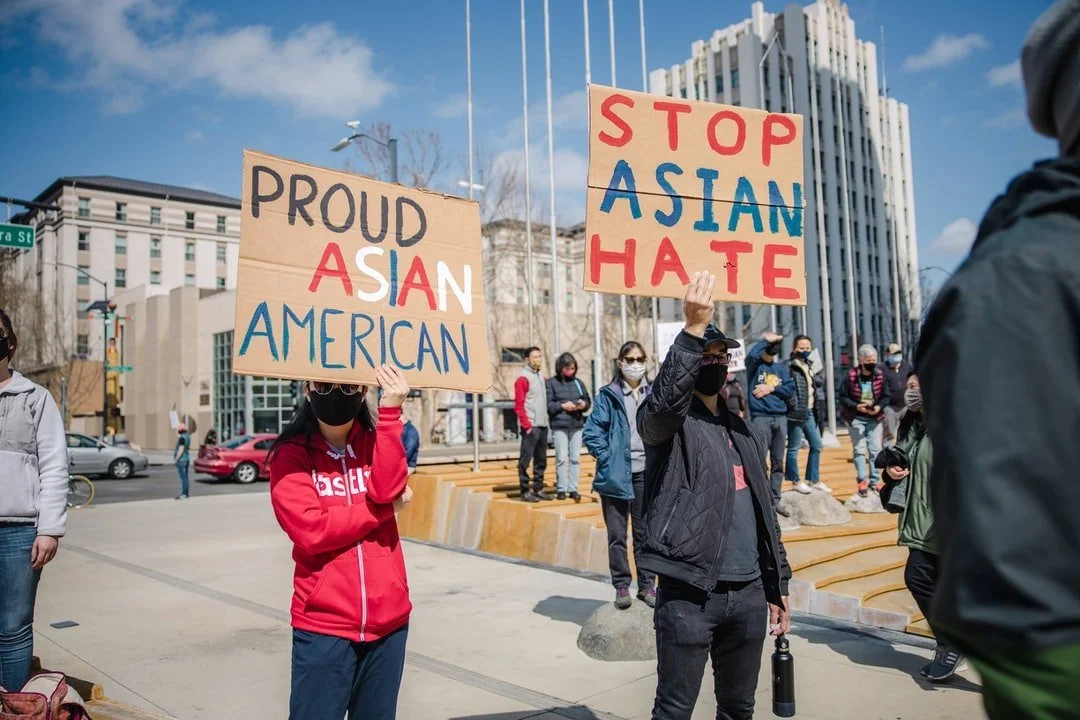
One year after the Atlanta shootings, there continues to be a significant rise in incidents of hate and violence against AAPI individuals. Most recently, the senseless killings of Michelle Alyssa Go and Christina Yuna Lee served as painful reminders of this disturbing trend. In response, #StopAAPIHate, a tagline that originated on social media, quickly spurred a national movement. Many communities have since rallied and protested to condemn anti-Asian violence, leading to new federal and state laws. While awareness of anti-Asian racism has grown significantly, xenophobia remains a meaningful threat to the safety and wellbeing of AAPI communities.
The intensity of anti-Asian racism has undoubtedly been exacerbated by xenophobic rhetoric tied to the novel Coronavirus’s origins in Wuhan, China and trending use of the hashtag #chinesevirus. These and other racist terms propelled inaccurate and inflammatory perceptions of AAPI and fueled anti-Asian hatred. According to Stop AAPI Hate, an organization created in March of 2020 to track instances of xenophobia, nearly 11,000 reports of anti-Asian hate were identified between March 2020 to September 2021. Almost half of the reported hate incidents occurred in public spaces, with verbal harassment continuing to account for the majority of incidents followed by physical assault. Data also shows that AAPI women reported twice as many hate incidents than AAPI men. AAPI non-binary individuals reported more deliberate shunning and increased discrimination due to gender and gender identity. These reports only account for a subset of hate incidents occurring nationwide and while larger policing measures have been created in response, such as the COVID-19 Hate Crimes Act and the New York Police Department’s Asian Hate Crime Task Force, many hate incidents still fall outside of police jurisdiction.
While justice for the victims of hate crimes is an important step for many, policing is far from the only solution in combating the rise of xenophobia. Stop AAPI Hate findings indicate that AAPI communities believe the most effective solutions to anti-Asian racism include ethnic studies for educational equity, community-based safety solutions, and civil rights legislation and enforcement. Investment in these focus areas can help to promote racial empathy, solidarity, actionable change, and justice.
More emphasis needs to be placed on strengthening AAPI discourse to address interpersonal and structural forms of AAPI racism and to focus on effective, long-term strategies. The harmful narratives currently driving an increase in hate crimes towards AAPI are flourishing against the backdrop of America’s deep-rooted history of discrimination, violence, and oppression against AAPI. Indeed, there are Asian Americans still alive today who remember the horrors of being put into internment camps by their own government during WWII, deemed a threat to national security solely on the basis of having Japanese ancestry. In spite of these past and present atrocities, AAPI racial trauma and scapegoating goes unrecognized and unnamed far too often. The price of this “invisibility,” maintaining and reinforcing racial trauma for millions of AAPI, is too high of a cost to ignore. It is time to make the invisible, visible.
AAPI Awareness and Microaggressions
Despite the long-documented history of violence against AAPI, many individuals assume that Asian Americans are largely immune to racism in America. However, AAPI fall victim to a distinct set of stereotypes and racial microaggressions that perpetuate invisibility and often relegate them to the status of perpetual foreigners. Microaggressions are brief, everyday exchanges that subtly communicate denigrating messages to people of color or marginalized populations, based on their group membership. Whether intentional or unintentional, microaggressions can be verbal, nonverbal, behavioral, or environmental indignities.
“So, where are you really from?” is one of the most pervasive microaggressions directed at the AAPI community. The assumption here is that all Asian Americans are foreigners or foreign-born, perpetual outsiders in their own land. These types of verbal microaggressions imply that foreigners do not belong in America or that Asian Americans are not “real” Americans. The underlying message is also reiterated when AAPI individuals are complimented for speaking “good English.” Although the majority of perpetrators engage in these microaggressions without intent to cause harm, the remarks still reflect a set of underlying biases and harmful assumptions about AAPI individuals.
Ascription of intelligence is another stereotype that is often harmful to AAPI. Comments such as, “You people always do well in school” or “You must be really good at math” replace curiosity with stereotype-driven assumptions, and put pressure on AAPI to conform to a stereotype that may have no relationship to a given individual’s personal identity or values. Repeated exposure to these microaggressions invalidates AAPI individuals and can lead to diminished confidence, limited opportunities, internalized racism and stereotype threat.
The exclusion of AAPI in conversations of race also stems from the “model minority” myth, one of the most insidious assumptions about Asian Americans. The stereotype presumes that AAPI are more successful than other ethnic minorities because they are a high-achieving, homogeneous group that have assimilated to American society through achievements in academics, social mores, and hard work. AAPI are presumed to be immune to the effects of racism because the myth implies upward mobility and class privilege. This fallacy and denial of racial reality has been used as a wedge between ethnic minorities, as it minimizes the inequality experienced by people of color, obscures racial violence, and relieves historically white systems from taking accountability for the long-standing injustices and indignities suffered by AAPI communities.
The model minority myth has also been used to rationalize and deny serious adversities that Asian Americans face. According to the Pew Research Center, Asian Americans experience the largest income-inequality gap of any ethnic and racial group in the United States. The misconception that all AAPI have done well in America diminishes the hardships and discrimination experienced by many AAPI across America. Additionally, the model minority myth often treats AAPI as one large monolith, ignoring the rich variety of cultures, histories, and identities that make up AAPI communities across the United States and around the globe.
AAPI identities are further erased and delegitimized due to misconceptions around class privilege and proximity to whiteness. As such, Asians and Asian Americans are often not seen as an ethnic minority group and their racial concerns are often overlooked or dismissed. When issues of race are discussed, AAPI are often considered white adjacent, though they may still be treated as part of an “out group” by their white peers. Additionally, proximity to whiteness can intensify Asian American colorism, pitting fair-skinned Asians against those with darker complexions.
Ethnic Studies for Educational Equity
AAPI and other ethnic minorities often engage in code-switching, a method of changing the way an individual speaks and engages with others in order to fit in or gain acceptance from a predominant cultural group. Many people of color feel the need to adapt to white culture because their chances of thriving in predominantly white schools, work or social environments depend upon how well they align or conform with the social expectations of those environments. While code-switching can enhance the sense of emotional safety in certain contexts, it removes cultural individuality, perpetuates racial invisibility, and dismantles the diverse AAPI collective.
AAPI individuals also contend with narrative scarcity – the lack of characters that look like them or accurately represent them – in mainstream culture, history, and media. The term “narrative plentitude”, coined by novelist Viet Thanh Nguyen, explains how American culture repeatedly projects the same stereotypical AAPI story without honoring the multi-faceted truths and complexities of being Asian American. Narrative scarcity exists for all minorities and giving space for communities to authentically share their stories helps to move towards narrative plentitude.
For AAPI women, the intersection of race and gender creates heightened risk of sexual violence, as Asian and AAPI women are often fetishized and exoticized. In film and television, Asian and Asian American women are often portrayed and memorialized as submissive, voiceless, or hypersexualized. Lack of representation and the harmful exoticization perpetuate stereotypes meant to objectify and “other” AAPI women. Further, these harmful perceptions are normalized and seen as complimentary, desirable, or positive. In reality, these negative stereotypes serve to dehumanize AAPI women, putting them at increased risk of violence, oppression, and marginalization.
Recently, Illinois lawmakers passed a bill requiring schools to teach Asian American history, a positive and necessary step in the right direction. Investment in ethnic studies, the study of the histories, experiences, cultures, and issues of racial ethnic groups and communities of color, can help to promote racial awareness and empathy. Sharing the histories and contributions of minorities can help to promote academic agency and reduce harassment and bullying in at-risk individuals. It can also provide frameworks for building more equitable and just institutions, schools, and work environments.
Community-Based Solutions
As reported by Stop AAPI Hate, the majority of hate incidents are not hate crimes. However, the rise in anti-Asian racism raises feelings of vulnerability, decreased self-worth, increased hypervigilance, and a loss of emotional and physical safety. Focusing on more policing and mass incarceration, which disproportionately affects communities of color, may lead to unintended problems and over-policing. Instead, investment in community-based solutions allows for culturally responsive programming and resources. Provided with language access, programs such as victim and survivor support, are integral to helping AAPI heal and move forward from trauma.
Asian American organizations have also seen a surge in engagement within the past year. Asian Americans Advancing Justice recorded more than 130,000 individuals participating in bystander trainings across the country. These and new organizations have provided mutual aid and helped to launch educational awareness, public safety resources, and healthcare screenings.
Another important resource to include in responding to anti-Asian violence is mental healthcare. AAPI have the lowest help-seeking rate of any racial or ethnic group. This is due to a combination of factors, including the stigma around mental health concerns, systemic barriers to accessing quality treatment, and a lack of culturally competent and responsive care. For AAPI, not living up to harmful stereotypes and expectations places a great psychological burden on the individual. Additionally, perceived racial discrimination has been associated with higher psychological distress, suicidal ideation, state anxiety, trait anxiety and depression. Thus, community-based solutions must also include access to culturally competent mental healthcare in order to improve overall outcomes.
Civil Rights Legislation and Enforcement
Focusing on civil rights enforcement ensures that governments are advocating and held accountable for combating interpersonal and systemic forms of discrimination against AAPI communities. Investment in enforcement and stronger civil rights laws can help reduce harassment of AAPI in public spaces, on transit, in schools, and online to ensure that all individuals are protected. The addition of Diversity, Equity, and Inclusion strategies in schools and businesses can also help to promote inclusivity and build strong diversity climates within the places that Americans learn and work.
Giving voice to and empowering AAPI communities is a productive step in moving towards real transformation. Building awareness of microaggressions and interpersonal and structural forms of Anti-Asian racism can help to validate a long history of AAPI discrimination and oppression and increase social recognition of these acts for what they are. While changes on the federal and state level are necessary for long-term systemic change, active solutions in advocating for and investing in educational equity, community-based programming, and mental health resources can deepen awareness and foster racial empathy. Engaging in these steps encourages AAPI visibility and strengthens community collaboration in rallying against AAPI hate.
Resources for further learning and action
- Asian Americans Advancing in Justice (AAAJ) Bystander Intervention Training
- Call on Congress to take action
- The University of Connecticut Asian and Asian American Studies Institute in conjunction with the #IAMNOTAVIRUS campaign has created a downloadable ‘Mental Wellness Activity Book for Asian Americans’
- Smithsonian Asian Pacific American Center
- Stop AAPI Hate Resources